
SEIDO High Frequency CPI: Inflation was 5.5% MoM in January
Weekly inflation cooled down in the final week of the month. Consumer prices grew 1.1% WoW, below the previous week (1.7% WoW). The monthly printing was 5.6% MoM, above the previous figure (5.4% MoM). The interannual rate was 105.9% YoY (vs 106.7% YoY). Core inflation led the cooldown in the last week of January, dropping to 0.7% WoW from the previous 2.4% WoW (revised), and with a monthly printing of 6.1% MoM (vs 5.3% MoM). Seasonal items showed a negative printing, with -0.2% WoW (vs 0.8% WoW -revised-), and the monthly rate was 4.2% MoM (vs 6% MoM -revised-). Lastly, February kicked off with regulated price increases of 4.8% WoW, and a monthly increase of 5.9% MoM (vs previous 5.3% MoM)

Monthly inflation remained elevated at 5.5% MoM. Monthly inflation moderately rose in January, with a headline rate of 5.5% MoM (versus previous 5.1% MoM). Annual inflation, meanwhile, was 107.6% YoY (compared to our measured values for January 2022), continuing the trend of extremely elevated printings.
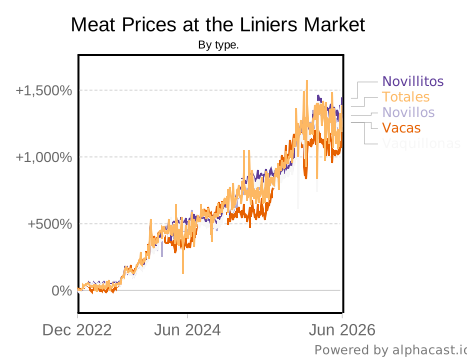
Seasonal items accelerated, while core inflation and regulated prices slowed down. During the first month of the year, core inflation was 5% MoM, below the previous 5.3% MoM. Moreover, seasonal prices increased 7.5% MoM (vs previous 4.6% MoM). Lastly, regulated prices grew 4.9% MoM (vs 5.1% MoM). Incidence of core inflation was 3.4pp. in January, with a further 1.4pp due to regulated price increases, and 0.8pp to seasonal items. In consequence, without regulated price adjustments, inflation would have been in the 4.7% MoM territory. Food prices, especially meat, rose signficiantly in January, with the overall food category showing an increase of 6.8% MoM (4-weeks moving average). On this regard, overall meat prices on the Liniers market have shown a remarkable increase of 34% YTD, closing the last week of January with a steep increase of more than 11% WoW.
Our CPI’s statistical carry-over from January to February was of 4.9% (vs 2.5% in the previous month). In addition, end of period (4-weeks) inflation was 6% MoM by the end of January , versus 5.5% MoM in the previous month.

Inflation dynamics for the first months of 2023 will remain elevated, with heightened uncertainty. After 2022 had the highest inflation printings since the end of hyperinflation 30 years ago, it will be more pressing than ever for the authorities to lay out a clear path forward for credible policies. Markets have been expected a more moderate direction given recent actions, but political pressures in a presidential election year will be large. Professional and consumer survey showed that inflation expectations drastically increased throughout 2022 - expected price increases for 2023 have risen from 45% in January 2022 to 98.4% in December in the Central Bank's REM, and anticipated price increases for 2024 have risen consistently over the past 12 months to 75%. Unmoored expectations will result in a high inflation rate until a serious effort to gain confidence and credibility is undertaken - so the aimless direction of economic policy does not lend credibility to any promise of a future moderation of policy.

Consequently, the authorities will be unable to stabilize the economy and anchor expectations as long as the future course of policy is not clarified further - and a decrease in the inflation rate without certainty will be unlikely. This becomes less likely with the election in sight, as the ruling party may attempt to shore up support by an expansion of the deficit - with unclear funding sources and, in all likelihood, an accelerating effect on price growth. Until and unless policymakers show genuine commitment to disinflation with a credible and consistent macroeconomic stabilization plan, inflation will remain unpredictably high and volatile.