
SEIDO High Frequency CPI - February 2023
SEIDO High Frequency CPI: Inflation was 6.2% MoM in February
Weekly inflation cooled down in the first week of March. Consumer prices grew 0.7% WoW, below the previous week (0.84% WoW). The monthly printing was 6.1% MoM, lower than the previous figure (6.3% MoM). The interannual rate was 104.6% YoY (vs 107.2% YoY). Core inflation led the cooldown in the last week of January, dropping to 0.1% WoW from the previous 1.1% WoW (revised), and with a monthly printing of 7.1% MoM (vs 7.4% MoM). Seasonal items showed a negative printing, with -0.1% WoW (vs 0.6% WoW -revised-), and the monthly rate was 3.2% MoM (vs 3.3% MoM -revised-). Lastly, the month kicked off with regulated price increases of 4.4% WoW, and a monthly increase of 6% MoM (vs previous 6.4% MoM)

Monthly inflation continued to accelerate at 6.2% MoM. Monthly inflation rose in February, with a headline rate of 6.2% MoM (versus previous 6% MoM). Annual inflation, meanwhile, was 109.5% YoY (compared to our measured values for February 2022), continuing the trend of extremely elevated printings.
Seasonal items slowed down, while core inflation spiked and regulated prices accelerated. During the first month of the year, core inflation was 7.1% MoM, sharply above the previous 5.4% MoM. Moreover, seasonal prices increased 3.5% MoM (vs previous 7.9% MoM). Lastly, regulated prices grew 6.4% MoM (vs 7.1% MoM). Incidence of core inflation was 4.8pp. in February, with a further 1.0pp due to regulated price increases, and 0.4pp to seasonal items. In consequence, without regulated price adjustments, inflation would have been in the 5.2% MoM territory.
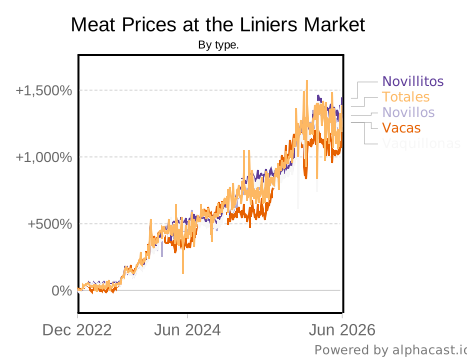
Food prices, especially meat, continued rising significantly in February, with the overall food category showing an increase of 9.2% MoM (4-weeks moving average) - the highest value ever recorded. On this regard, overall meat prices on the Liniers market have shown a remarkable increase of 37% YTD, though with some signs of a deceleration in certain categories by the end of the month.
Our CPI’s statistical carry-over from February to March was of 2.4% (vs 5.1% in the previous month). In addition, end of period (4-weeks) inflation was 5.5% MoM by the end of the month, versus 6.2% MoM in the previous month.

Inflation dynamics for the first half of 2023 will remain elevated, with heightened uncertainty. Given that 2022 had the highest inflation printings since the end of hyperinflation 30 years ago, and there have been no announcements of credible policy actions, it seems likely that inflation will continue at a high pace in the first half of the year. It is uncertain how much of a change there will be in the government's response, since political pressures in a presidential election year will be large. Professional and consumer surveys show that inflation expectations remain at drastic levels - expected price increases for 2023 have moderately cooled from nearly 100% YoY to 97.6% in January, while inflation for 2024 has grown to 79.6% in the Central Bank's REM. A higher overall level of expectations will result in a high inflation rate until a serious effort to gain confidence and credibility is undertaken - so the aimless direction of economic policy does not lend credibility to any promise of a future moderation of policy.

In consequence, a decrease in the inflation rate without certainty will be unlikely until the authorities prove themselves willing to stabilize the economy and anchor expectations by developing a consistent and credible future pathway for policy. Since 2023 is a presidential election year, this has become less probable, due to the fact that the ruling party may attempt to shore up support by an expansion of the deficit without any real funding sources and, in all likelihood, a magnifying effect on price growth. As long as the government does not show commitment to a macroeconomic stabilization plan that is credible, consistent, and sustainable during the presidential transition, the inflation rate will continue to behave erratically and will not budge from its current record-high levels.